
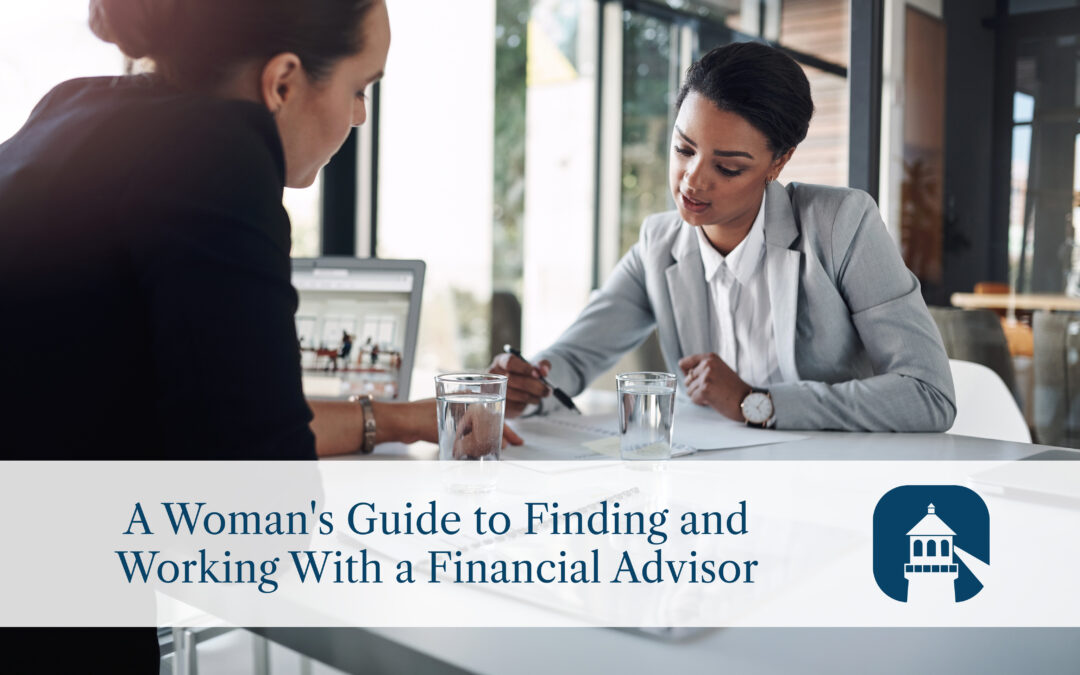
Women now control roughly one-third of U.S. household financial assets ($10 trillion), and that’s expected to triple by 2030, according to McKinsey & Company. More women than ever are the primary financial decision-makers in their households, managing careers, investments, estate plans, and long-term goals with intention and clarity.
And yet the financial planning industry was not originally built with women in mind. Many women tell us that, in meetings with previous financial planners, they felt their questions were rushed past, or their partner was treated as the primary client.
This guide is for any woman who wants to work with a financial planner and wants to go into it informed. We’ll share some tips on what to look for, what to expect, what questions to ask, and how to recognize when you’ve found the right fit (or not).
Disclaimer: This post is educational and is not a recommendation of any specific advisor or firm.
Women’s Financial Lives Require More Intentional Planning
Before getting into what to look for in an advisor, it helps to understand why the relationship matters so much, and what makes women’s financial lives distinctly complex.
Longevity
Women in the U.S. live an average of nearly six years longer than men, which is a major difference. It means more years to fund in retirement, higher lifetime healthcare costs, a longer window of exposure to inflation, and a greater likelihood of managing finances entirely alone at some point.
Caregiving
Women are far more likely to experience career interruptions tied to caregiving responsibilities. 60% of sandwich generation caregivers — those caring for both children and aging parents simultaneously — are women, and they spend an average of 25 more minutes per day on caregiving tasks than men. Time out of the workforce has real financial consequences: it reduces retirement contributions, creates gaps in employer benefits, and lowers future Social Security benefits, since the SSA calculates benefits based on the 35 highest-earning years.
Wealth transfer
Nearly $40 trillion will transfer to widowed women between 2024 and 2048, including $21 trillion among high-net-worth spouses. Research shows roughly two-thirds of men predecease their wives. That means in most couples, the woman will eventually be managing the full household financial picture — often for the first time, and often during periods of grief. The financial planning relationship she has (or doesn’t have) at that moment will matter enormously.
Investment approach
Despite, or perhaps because of, this complexity, women tend to be disciplined, long-term-oriented investors. McKinsey’s 2025 research found that women prioritize stable, goal-oriented investing over short-term market gains. They are less likely to make reactive decisions during volatility, and more likely to stay committed to a long-term plan. That’s not a limitation. It’s a meaningful advantage, and a good financial planner will recognize and build on it.
None of this makes women a special case or a problem to be solved. It makes the case for financial planning that accounts for the full reality of a woman’s financial life, rather than a generic plan built around someone else’s assumptions.
What a Good Financial Planning Relationship Actually Looks Like
A planning relationship is more than a portfolio and an annual review. The best ones feel like a genuine partnership, where you are heard, informed, and confident that your plan reflects your actual life and goals.
Research from New York Life Investment identified five things women value most in an advisor relationship: empathy, financial wellness, alignment, communication, and education. These aren’t extras. They’re the baseline for a relationship that works.
Here’s what each one looks like in practice:
Empathy
Your advisor should listen before prescribing. A good planning relationship starts with understanding your life, your values, your concerns, and your goals. They do NOT start with a product recommendation or a portfolio allocation right out of the gate. If a first meeting feels like a sales call, that’s information worth taking seriously. This is also an indicator that the planner is not a CERTIFIED FINANCIAL PLANNER® professional, as they are required to act in your best interests.
Alignment
Your advisor’s recommendations should reflect your goals, not a template. They should want to know what you’re planning, when, and why, which should drive every conversation. When something doesn’t feel aligned with what you’ve told them matters to you, you should be able to say so and have it taken seriously.
Communication
You should never leave a meeting feeling confused, talked past, or like you asked a question you shouldn’t have. A good advisor uses plain language, explains their reasoning, and creates space for questions at every stage. If you feel patronized or rushed, trust that instinct. It’s telling you something real.
Education
You shouldn’t need to be a financial expert to work with a financial planner, but a good one will make you more informed over time. You should understand your plan well enough to explain the basic shape of it to someone else. If you can’t, your advisor hasn’t done their full job.
Proactive outreach
The relationship shouldn’t go quiet between annual reviews. When the market shifts significantly, when tax law changes, when a major life event happens, a good advisor reaches out. They don’t wait for you to wonder if you should be worried.
What to Expect When You Start Working With a Planner
If you’ve never worked with a financial planner before, the process can feel opaque. Here’s what it typically looks like.
The first meeting is a discovery conversation. The planner will ask about your goals, current financial situation, family, concerns, and what you’re hoping to accomplish. You should also be asking questions (more on that in the next section). If you feel pressure to commit before you’re ready, that’s a red flag.
Ongoing planning typically involves:
- An initial comprehensive financial plan covering your full picture, including income, savings, debt, insurance, estate documents, retirement projections, and goals
- Regular review meetings, annually at minimum and more frequently when your life is in transition
- Access to your planner when questions come up between meetings
- Coordination with other professionals, including your accountant and attorney, as needed
Some planners may also offer coaching, one-time plans, and other types of relationships. If you don’t want ongoing support, it’s helpful to think through how you’d like to work with a planner and find one that fits your needs.
What you should always have access to:
- A clear explanation of your plan in plain language, whenever you ask for it
- Full transparency about fees and how your advisor is compensated
- The ability to ask any question and receive an honest answer
- Your own financial documents and account information, at any time
Questions to Ask Before You Commit
A first meeting with a potential advisor is as much an interview as it is a consultation. You are evaluating them as much as they are getting to know you. Here are the questions worth asking:
About their practice:
- Are you a fiduciary? (A fiduciary is legally required to act in your best interest at all times, for all clients.) The answer should be yes, clearly and without qualification.
- How are you compensated? Fee-only, fee-based, or commission? What do I pay, and when?
- What does a typical client relationship look like? How often will we meet, and how do you stay in touch between meetings?
- What types of clients do you typically work with? Do you have experience with people in my life stage or situation?
About their approach:
- How do you approach financial planning? Is it investment-focused, or does it include cash flow, insurance, estate planning, and tax considerations?
- How do you handle major life transitions like a divorce, a death, a career change, or an inheritance?
- How do you communicate with clients when things change in the market, in tax law, or in my own life?
- Who else is on your team, and who would I work with on a day-to-day basis?
About fit:
- Can you walk me through how you would approach someone in my situation?
- What do you wish clients asked you more often?
- What’s your ideal client?
There are no wrong questions. If an advisor makes you feel like there are, you have your answer.
Terms to Know
Not all financial professionals are the same, and we want to make sure you understand some of the titles/descriptions you might run into.
A fiduciary is legally required to act in your best interest at all times — not in the interest of their firm, their broker-dealer, or a product commission. Not all advisors are fiduciaries. Ask directly, and expect an unambiguous answer.
A fee-only planner is paid directly by you — by the hour, on retainer, as a flat fee, or as a percentage of assets managed (or sometimes a blend). They do not earn commissions when they recommend financial products, which removes a significant and common conflict of interest. Fee-based advisors, by contrast, may charge fees and also earn commissions.
A CFP® (Certified Financial Planner) has completed rigorous education, passed a comprehensive board exam, and is held to ongoing continuing education and ethical requirements. It’s among the most credible credentials in the financial planning profession.
As of 2025, only about 24% of CFP® professionals are women — though that number is growing, with female CFP® certifications increasing at a faster rate than male in recent years. Whether you prefer to work with a woman, a man, or a team, what matters most is that you feel genuinely heard, respected, and well-served. Don’t let the search for a female advisor stop you from finding a great one.
To start your search for a fee-only financial planner, you can check out:
- NAPFA: the National Association of Personal Financial Advisors, a directory of fee-only fiduciary planners.
- Garrett Planning Network: a directory of hourly-only and fixed/flat service planners.
- CFP Board: a searchable directory of Certified Financial Planner professionals
Red Flags When Interviewing Planners
A good financial planning relationship feels like a partnership. They’ll be collaborative, clear, and genuinely focused on your goals. When something feels off, it usually is. Trust that instinct.
Red flags worth taking seriously:
- You feel talked at, not talked with
- Your questions are minimized, deflected, or rushed past
- You don’t understand what’s being recommended or why, and that’s never fully addressed
- You feel pressure to make decisions before you’re ready, or to buy something right away
- Conversations focus on products rather than your goals
- If you’re in a partnership, you are consistently left out of conversations or treated as secondary
- Fees are never clearly explained, or the explanation keeps changing
You are not obligated to stay in a relationship that doesn’t serve you. It is completely normal and entirely appropriate to take more than one conversation to find the right planner. The goal is a relationship that lasts years and helps you navigate some of the most important financial decisions of your life. It’s worth taking the time to get it right.
You Deserve a Plan That Reflects You
Women are not a niche market or a special case. They are the fastest-growing segment of wealth holders in the country, with financial lives that are often more complex, longer-term, and more layered than is typically reflected in generic financial planning approaches.
The right financial planner sees all of that. They understand that longevity, caregiving, wealth transfer, and life transitions aren’t edge cases; they’re central to the financial picture of most of the women they serve.
You deserve a planning relationship that actually fits your life. If you’re ready to start that conversation, we’d love to be part of it. We are a woman-owned, woman-led firm that starts each relationship by getting to know you, your values, your money stories, and what you want your money to do for you.
Get in touch with the Guiding Wealth team today, and let’s see if working together is the right fit for you!